Explore Nigeria's Mineral Resources: Detailed Map Insights
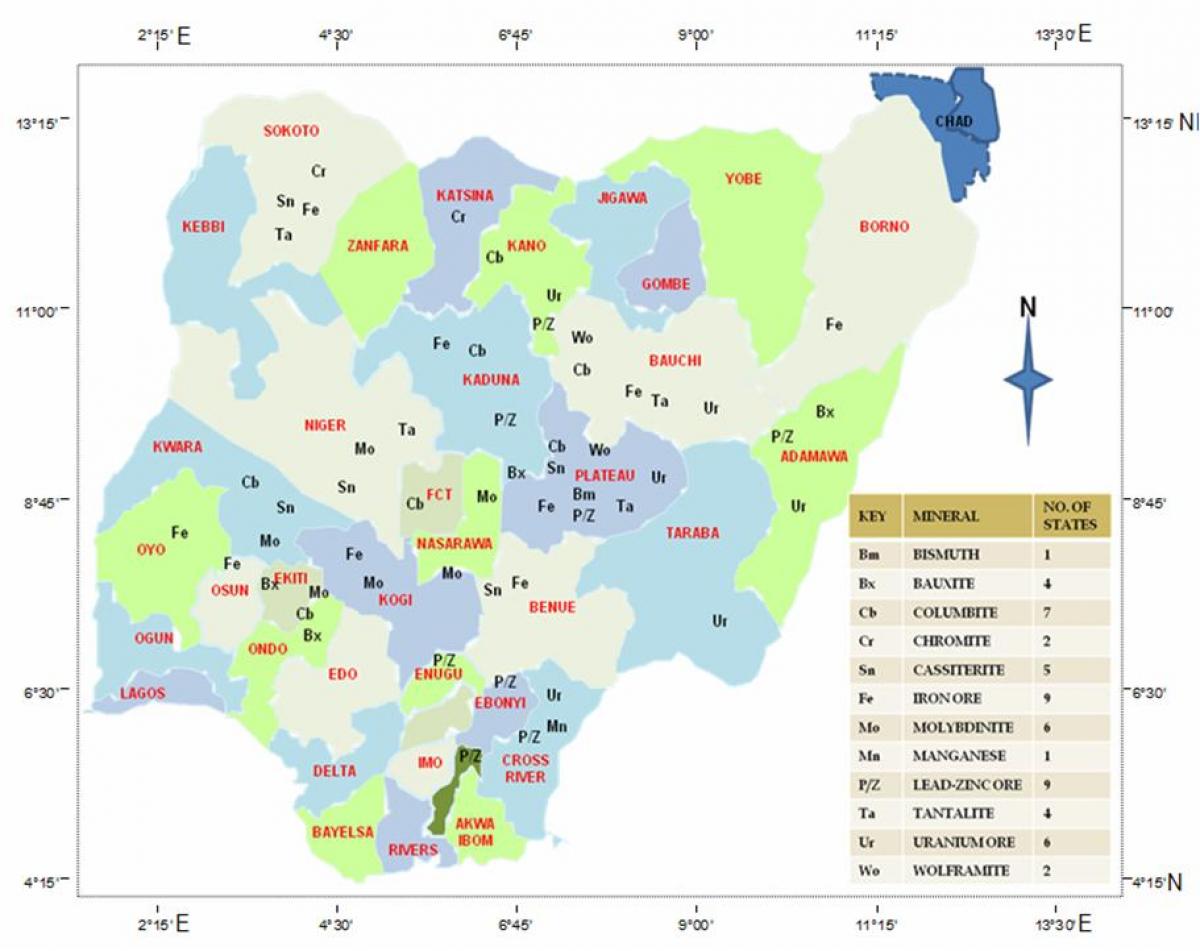
Nigeria is a country endowed with a wealth of natural resources, and its mineral resources map reveals the distribution and types of minerals found throughout the nation. This map is an essential tool for understanding Nigeria's geological composition, showcasing various minerals such as coal, limestone, iron ore, tin, and gold. By examining this map, one can appreciate the geographical spread of these resources, which are vital for Nigeria's economic development and industrial growth.
The significance of Nigeria's mineral resources cannot be overstated. Historically, the country's economy was heavily reliant on agriculture, but the discovery and exploitation of mineral resources have increasingly contributed to national income. The mining sector has the potential to provide employment opportunities, promote local business, and facilitate foreign investments. The map highlights regions where mining activities are concentrated, particularly in the northern and central parts of Nigeria, which are rich in minerals. Understanding this distribution allows for better planning and investment in the mining sector.
Geographically, Nigeria's mineral resources are diverse and spread across various states. The northern states, such as Plateau, are known for their tin deposits, while states like Ogun and Kogi are rich in limestone and coal. These resources are not only crucial for domestic consumption but also for export, enhancing Nigeria's position in the global mineral market. The map serves as a visual representation of these resources, making it easier for investors and policymakers to identify areas with high mineral potential.
Additionally, this mineral resources map is highly beneficial for educational purposes. Students and researchers can utilize it to study Nigeria's geology, resource management, and economic planning. It opens avenues for discussions on sustainable mining practices and the environmental impacts of resource extraction. As Nigeria continues to explore its mineral wealth, understanding the geographical distribution of these resources will play a key role in ensuring responsible and sustainable development.
In conclusion, the map of Nigeria showing its mineral resources is more than just a geographical tool; it is a gateway to understanding the economic landscape of the country. With the ongoing efforts to diversify the economy, this map provides valuable insights into the potential of Nigeria's mineral wealth. The importance of responsible mining practices and the economic implications of resource distribution are critical for the future prosperity of Nigeria. Exploring this map can lead to a deeper appreciation of Nigeria's rich geological heritage and its role in the global economy.
In summary, Nigeria's mineral resources map is a vital resource for anyone interested in the country's economic potential and geographical diversity. We encourage you to explore more about Nigeria's resources and their significance in the global landscape.
-
Nigeria ranks as the largest producer of tin in Africa, primarily located in the Jos Plateau region. This area has been mined for over a century, making it a vital part of Nigeria's mining history.
-
The country is endowed with over 44 different minerals, including precious metals like gold and diamonds, along with industrial minerals such as clay and barite.
-
Nigeria's coal reserves are estimated to be around 2.7 billion metric tons, predominantly found in the Enugu and Benue states, which have been mined since the 1900s.
-
Limestone is extensively mined in Nigeria, supporting the cement industry, which is one of the fastest-growing sectors of the economy, especially in regions like Ogun and Kogi states.
-
The Nigerian mining sector has been identified as a key area for economic diversification, with the government seeking to increase its contribution to GDP from 0.3% to 10% by 2025.
-
Gold deposits in Nigeria are primarily located in the northwest region, particularly in Osun and Zamfara states, where artisanal mining is common among local communities.
-
Iron ore deposits in Nigeria are mainly found in the Itakpe and Ajabanoko areas, with significant potential for the development of steel production in the country.
-
Nigeria has a rich history of mining dating back to the pre-colonial era, where various communities engaged in the extraction of minerals for trade and local use.
-
The Nigerian government has implemented various policies to attract foreign investment in the mining sector, aiming to boost mineral exploration and production across the country.
-
Environmental sustainability challenges in mining areas have led to increased advocacy for responsible mining practices that balance economic benefits with ecological preservation.