Understanding the Nigeria Population Density Map and Its Importance
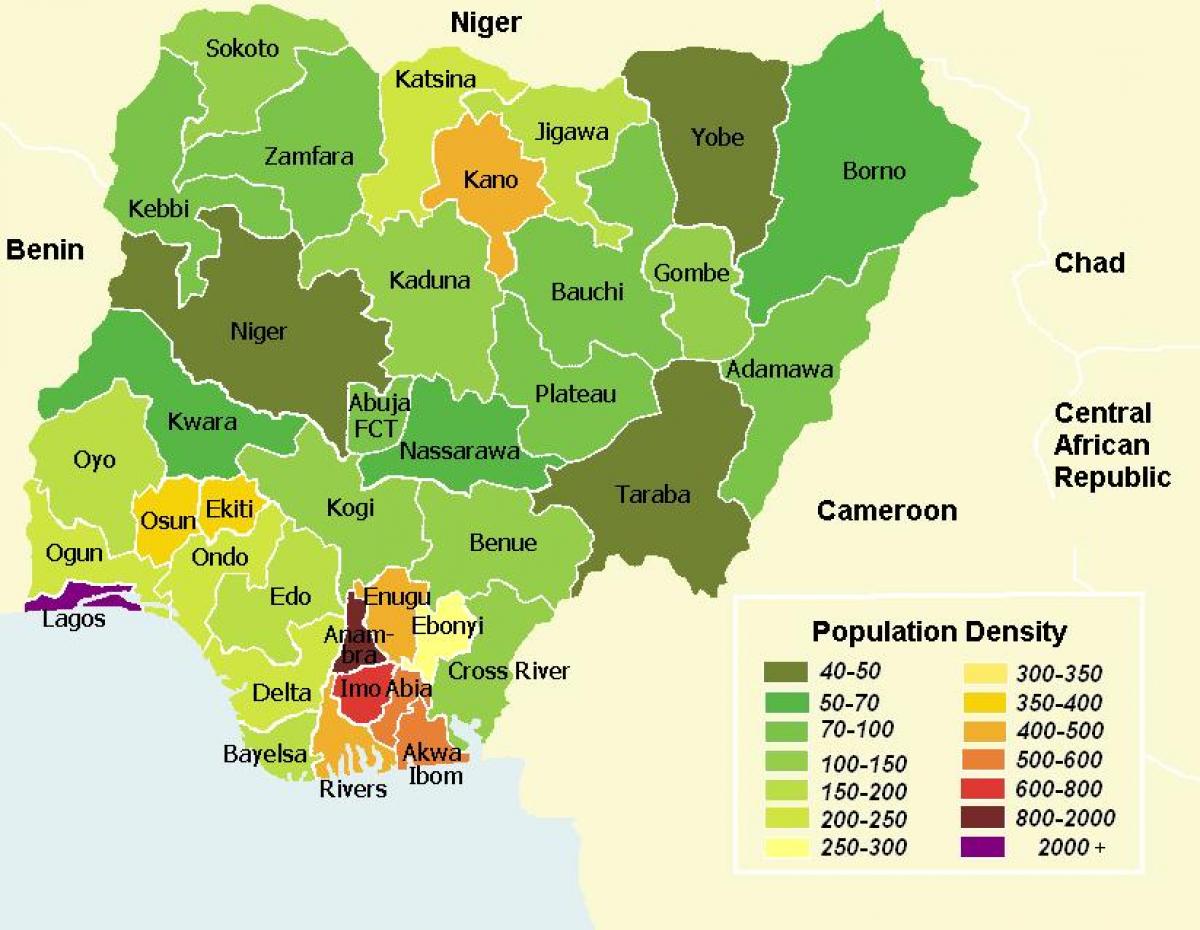
The Nigeria population density map serves as a crucial tool for understanding the distribution of the Nigerian population across its diverse regions. This map visually represents the number of people living per square kilometer in various areas, highlighting urban centers, rural communities, and regions with significant population growth. By analyzing this map, one can gain insights into demographic trends, resource allocation, and socio-economic development across Nigeria.
Nigeria is the most populous country in Africa, with a population exceeding 200 million people. The population density varies significantly, with urban areas such as Lagos and Abuja exhibiting much higher densities compared to rural regions. For instance, Lagos is known for its bustling metropolis with a density that surpasses 20,000 people per square kilometer. In contrast, the northern states like Yobe and Borno have much lower densities due to vast uninhabited land and lower population growth rates. This stark contrast in density is essential for urban planners, policymakers, and researchers as they aim to address infrastructure, healthcare, and educational needs effectively.
Historically, Nigeria has experienced rapid population growth since gaining independence in 1960. The interplay of various factors such as fertility rates, migration, and urbanization has shaped the population landscape. The population density map reflects these changes, showcasing areas of high migration due to economic opportunities and those with declining populations due to factors like conflict and environmental changes. Understanding these trends is vital for government planning and investment in social services.
Geographically, Nigeria's diverse landscapes contribute to its population distribution. The southern regions, characterized by lush vegetation and favorable climates, tend to attract more people compared to the arid northern areas. Additionally, the Niger River and its tributaries have historically supported settlement and agriculture, further influencing population density. The map reveals these geographical nuances, providing valuable context for environmental studies and resource management.
The practical applications of the Nigeria population density map are extensive. For businesses, it aids in strategic planning and market analysis, allowing companies to identify potential customer bases. For humanitarian organizations, understanding population density is crucial for disaster response and resource distribution. Furthermore, the map can assist in electoral planning, ensuring fair representation and access to services in densely populated areas.
In conclusion, the Nigeria population density map is more than just a representation of numbers; it is a vital resource that informs various sectors within the country. By understanding how and where people live, stakeholders can make informed decisions that contribute to Nigeria's sustainable development and enhance the quality of life for its citizens.
The Nigeria population density map offers invaluable insights into the country's demographics and geography. By exploring this map, you can better understand the dynamics shaping Nigeria today.
-
Nigeria is the most populous country in Africa, with over 200 million residents as of 2023.
-
Lagos, Nigeria's largest city, is one of the fastest-growing cities globally, with a population density exceeding 20,000 people per square kilometer.
-
The northern states of Nigeria, such as Borno and Yobe, have some of the lowest population densities due to harsh climatic conditions and ongoing conflicts.
-
Nigeria's population growth rate is approximately 2.6% per year, making it one of the fastest-growing populations in the world.
-
The Niger River, which flows through Nigeria, is a critical resource that has historically supported agriculture and settlement, influencing population density in its vicinity.
-
Urbanization in Nigeria has led to significant migration from rural areas to cities, with over 50% of the population now living in urban centers.
-
The country's population is diverse, with over 250 ethnic groups, contributing to a rich cultural tapestry that affects social dynamics and population distribution.
-
Nigeria has one of the youngest populations globally, with over 60% of its citizens under the age of 25, impacting labor markets and economic development.
-
Government policies and initiatives aimed at improving education and healthcare are vital in addressing the challenges posed by high population density in urban areas.
-
Understanding population density is crucial for environmental sustainability, as it influences resource management, urban planning, and climate resilience efforts in Nigeria.